
Why do cars behave so differently in the cold? A deep dive into the physics of winter tyres, rubber compounds, and the 'working window' for maximum safety and driving pleasure.
When the days grow shorter, fog hangs over the valleys, and the thermometer drops below zero for the first time in the morning, many drivers shift their mindset. Winter is often seen as the bothersome time of year: scraping ice, slushy roads, and dark commutes. For us enthusiasts and motorsport fans, however, winter is something else entirely. It is a lesson in physics. It is the season where the limits of grip are drastically lowered, and where the sensitivity of your 'seat-of-the-pants' feel decides between success and failure.
But why does a vehicle behave so fundamentally differently at low temperatures? Why is a high-performance summer tyre suddenly insufficient, even when the road is dry? And what does the correct tyre rubber compound actually have in common with a good steak on the grill?
Let’s dive into the world of polymer chains, temperature windows, and tread blocks – explained clearly, but with the pure heartbeat of a racer.
To understand how a tyre grips, we must imagine the rubber like a piece of meat on the grill.
A summer sports tyre is like a lean steak. If you place it on a hot grill in summer temperatures, it becomes soft, supple, and adapts perfectly to the surface structure of the grate. This is exactly what a summer tyre does in July: the rubber heats up, becomes elastic, and interlocks on a microscopic level with the unevenness of the asphalt. In tyre technology, this effect is called adhesion. The rubber literally 'sticks' to the stone.
What happens if you take this steak out of the fridge or even freeze it? It becomes hard as a brick. If you place a frozen piece of meat on a table, it slides smoothly across. It has no flexibility left.
This is exactly what happens to a summer tyre at temperatures below 7°C. The polymers and resins contained in the summer rubber compound lose their elasticity. The tyre 'vitrifies.' It becomes hard like plastic. Even if the road is crystal clear and dry, the hard summer tyre can no longer snuggle into the pores of the asphalt. Braking distances increase drastically, and in corners, the car suddenly pushes over the front axle (understeer).
This is where the winter tyre comes in. Its rubber compound is formulated completely differently. It contains a very high proportion of silica (silicon dioxide) and special plasticiser oils. Sticking with our comparison: the winter compound is like a sauce that doesn’t quite solidify even in the freezer. It remains extremely supple and flexible even at the coldest sub-zero temperatures. Only then can the tyre perform its work and build grip even in icy cold conditions.
Beyond the chemical compound, the winter tyre is distinguished by its most visually striking feature: the tread.
If you look at a summer performance tyre (like a Michelin Pilot Sport Cup 2 or Pirelli P Zero), you see large, massive tread blocks with few grooves. The goal in summer is maximum stiffness so that the block does not deform in fast corners.
A winter tyre, on the other hand, looks like finely sliced Swiss cheese. It is covered with hundreds of tiny, zigzag-shaped incisions. These are called sipes.
How do these sipes work? 1. The eraser effect: As the tyre rolls over the asphalt, the individual tread blocks deform. The sipes open like little mouths, grip the surface, and close again. This creates a mechanical interlocking. 2. Snow grips snow: It might sound paradoxical, but nothing sticks to snow better than snow itself! The sipes suck up the loose snow on the road and compress it into the tread grooves. As the tyre continues to roll, the compressed snow in the tread bonds with the snow on the road surface. 3. Water displacement: Meltwater or slush creates a greasy film between the rubber and the road. The deep longitudinal and transverse grooves of the winter tyre act like drainage channels, pumping water away to the side at lightning speed to prevent aquaplaning and slush-planing.
In motorsport, engineers constantly speak of the 'working window' – the optimal operating temperature range of a tyre.
Summer tyres only feel comfortable from an outside temperature of about 15°C to 20°C. On the race track or during sporty driving, they operate optimally at internal tyre temperatures between 70°C and 90°C. Winter tyres are designed to develop their full grip between -20°C and +7°C.
Anyone who thinks they can continue driving on winter tyres in a hot August out of laziness will experience the opposite of performance. The soft rubber compound overheats rapidly. The tread blocks with their many sipes begin to 'walk' under load (they bend excessively). The steering feel becomes vague, precise turn-in becomes impossible, wear sky-rockets, and the braking distance on hot asphalt becomes dangerously long.
Winter confronts us drivers with constantly changing surfaces. A sensitive pilot must feel what is happening under the wheels at all times.
1. Dry Cold (0°C to -10°C): Phenomenon: The asphalt is dry, looks grippy, but is icy cold. Behaviour: Grip is deceptively high but noticeably below summer levels. Since the asphalt is extremely hard, tyre wear increases during aggressive driving. The steering feel is usually precise, but feedback about the limit comes abruptly.
2. Wet Roads and Black Ice (+2°C to -2°C): Phenomenon: The most dangerous window. When temperatures hover around freezing, an invisible film of water often forms on frozen ground (black ice). Behaviour: Mechanical adhesion fails here. Even with winter tyres, the friction coefficient drops from a normal 0.8 to 1.0 down to a dramatic 0.1. This means: The braking distance increases tenfold! The steering suddenly becomes feather-light – a clear signal from the vehicle that the front axle has lost all contact.
3. Closed Snow Cover: Phenomenon: Pure snow under the wheels. Behaviour: The car reacts with a delay. Steering inputs must be made gently and with foresight. Here, the quality of the winter tyre is felt intensely: a good tyre builds noticeable guiding grip via the sipes. At the limit, the car begins to slide softly. Anyone who steers hectically or slams on the brakes now will completely break the remaining traction.
Winter challenges us as drivers. It demands that we understand the mechanics of our vehicle and have respect for the laws of nature. A winter tyre is not a bothersome legal requirement, but a technical masterpiece of chemistry and geometry. It ensures that the power of the engine and the commands of the steering wheel actually reach the road.
Those who understand the connections between rubber compound, temperature, and tread will not only drive more safely in winter – they will drive with a completely new awareness of physics at the limit.
And that is exactly what defines a true enthusiast.
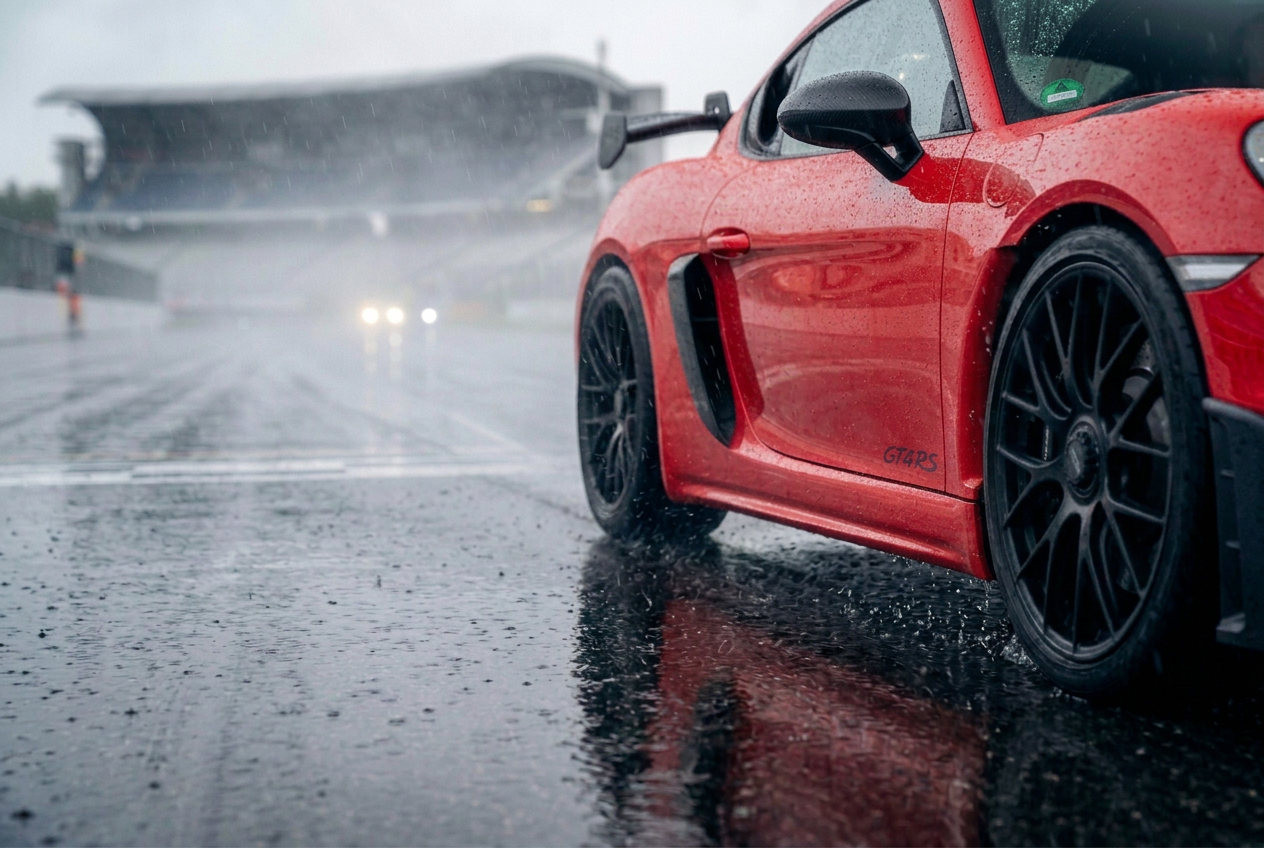
When Asphalt Freezes: Why Winter Changes Your Driving Feel – and What Tyres Actually Deliver
Why do cars behave so differently in the cold? A deep dive into the physics of winter tyres, rubber compounds, and the 'working window' for maximum safety and driving pleasure.
Never miss an article
Race impressions, setup insights and team news straight to your inbox -- before it's anywhere else.
Subscribe to the newsletter