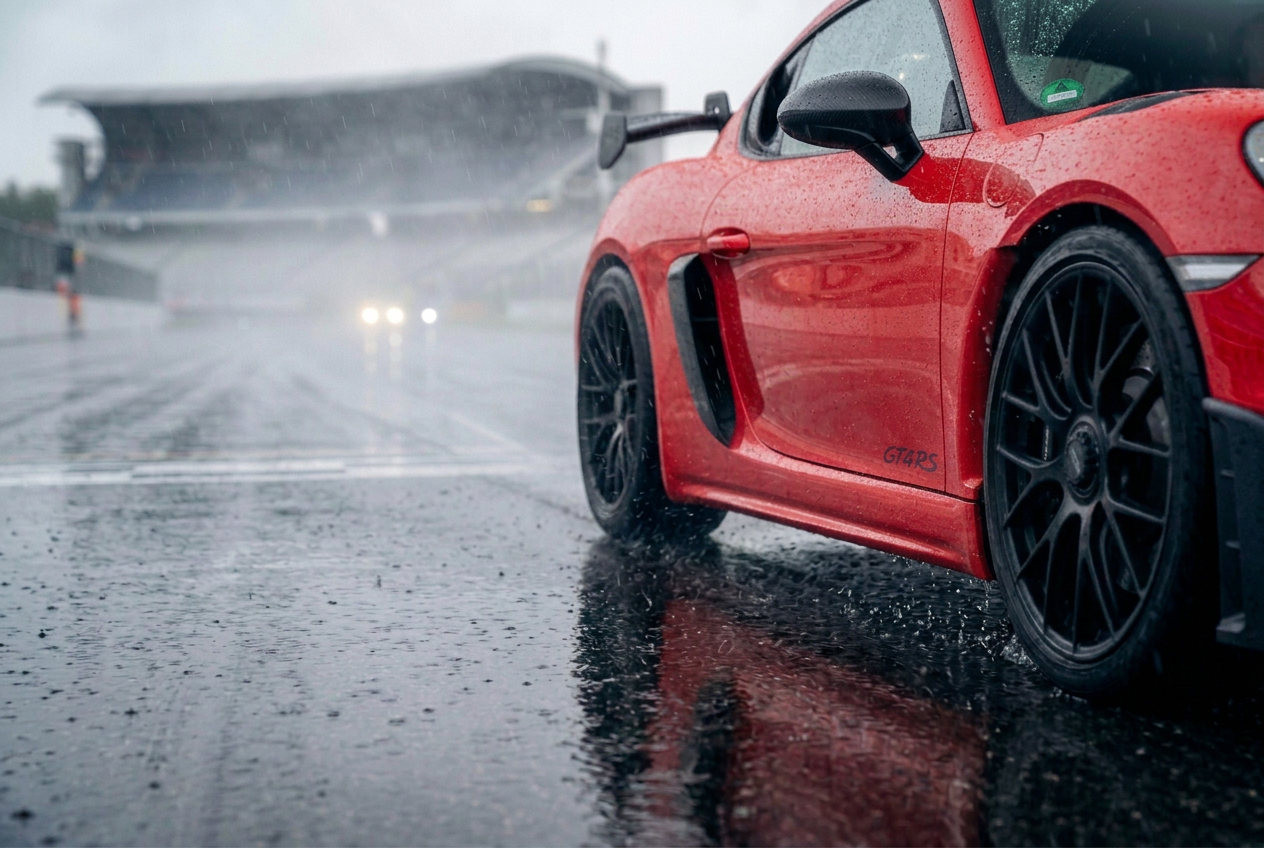
A deep dive into the fascination and mental challenges of the world's most legendary racetracks: the Nürburgring Nordschleife and Spa-Francorchamps.
There are places in this world where the air smells different. Places where asphalt is not just tar and bitumen, but history, reverence, and myth. For the passionate racing driver and GT enthusiast, there are two racetracks that stand out from the calendar like hallowed halls: the Nürburgring Nordschleife in the Eifel and the Spa-Francorchamps circuit in the Belgian Ardennes.
They are called the 'Cathedrals of Motorsport' for a reason. Anyone who leaves the pit lane here in the bucket seat of a Porsche GT vehicle and takes on the Green Hell or the Ardennes Rollercoaster is not experiencing a normal track day. It is an encounter with one's own limits, physics, and one's own humility.
But what distinguishes these courses from modern Grand Prix tracks with their vast asphalt run-off zones? And what happens in the driver's mind when heading towards these iconic high-speed sections?
Sir Jackie Stewart once gave the Nordschleife its famous nickname – and anyone who has ever flown through the Eifel at racing speed knows how fitting that name is. Over 20 kilometres in length, more than 70 corners, 300 metres of elevation change, and a track layout that snakes through the dense forest like a narrow ribbon.
In the cockpit of a vehicle like the 718 Cayman GT4 RS, perception narrows instantly starting from the Hatzenbach section. The notorious tunnel vision sets in. The guardrails are often only a few centimetres from the edge of the track. There is no gravel bed to forgive mistakes. If the car starts to slide at the limit here, millisecond reaction times decide the safety of man and machine.
One of the most intense moments in all of motorsport takes place in the Fuchsröhre. You plunge down the steep slope, the engine screaming near the redline, the walls of trees blurring past you. At the lowest point of the dip, compression takes hold: centrifugal force pushes the car into the asphalt with brutal violence. The suspension is compressed down to the bump stops. Your body is crushed deep into the carbon bucket seat while your pulse hammers your heartbeat against your helmet.
Immediately afterwards, you must unweight the car and brake for the chicane at the top of Adenauer Forst. Anyone who is not 100% focused here or misses the racing line by just a few centimetres pays a high price.
If the Nordschleife is equated with pure, uninterrupted concentration, then Spa-Francorchamps stands for fluid speed and bold changes in rhythm. The Ardennes Rollercoaster is famous for its unpredictable weather – it is not uncommon for it to be dry on the start-finish straight while raining heavily in Blanchimont.
No corner combination in the world enjoys an aura comparable to Eau Rouge / Raidillon. You come out of the La Source hairpin, accelerate down the hill, and head towards what looks like a vertical wall. At the bottom of the dip, you cross the small Eau Rouge stream before the car is abruptly shot to the left and immediately back to the right over the blind crest.
A mental battle takes place: your brain screams 'Brake!' However, the racer in you knows that the rear will only stay stable if the aerodynamic downforce is maintained. When the car goes light at the top of the ridge, and for a split second you see only the sky before catapulting onto the long Kemmel Straight, a wave of pure adrenaline surges through you.
Modern tracks invite you to push the limit step by step. If you overstep the mark, you spin harmlessly onto extensive run-off zones. The Nordschleife and Spa do not reward such arrogance. They demand humility.
Experienced pilots know: track knowledge is only the beginning. You must know every undulation, every asphalt seam, and every crest in your sleep. Furthermore, respect for the conditions is vital, as dew or humidity under the trees at Breidscheid changes the grip lap by lap. You must not drive against the track, but work with the vehicle; the loading and unloading of the suspension must happen fluidly.
When you turn onto the Döttinger Höhe after a fast lap on the Nordschleife or cross the start-finish line in Spa after the Bus Stop chicane, something wonderful happens. The tension eases, you take a deep breath, and a wide, involuntary grin spreads under your helmet.
It is the satisfaction of having conquered the elements, the mechanics, and your own fears. These tracks demand everything from you – but that is exactly why they give you memories that last a lifetime. That is precisely the magic of the cathedrals of motorsport.

The Cathedrals of Motorsport – What Tracks like the Nordschleife and Spa Do to You
A deep dive into the fascination and mental challenges of the world's most legendary racetracks: the Nürburgring Nordschleife and Spa-Francorchamps.
Never miss an article
Race impressions, setup insights and team news straight to your inbox -- before it's anywhere else.
Subscribe to the newsletter